


News









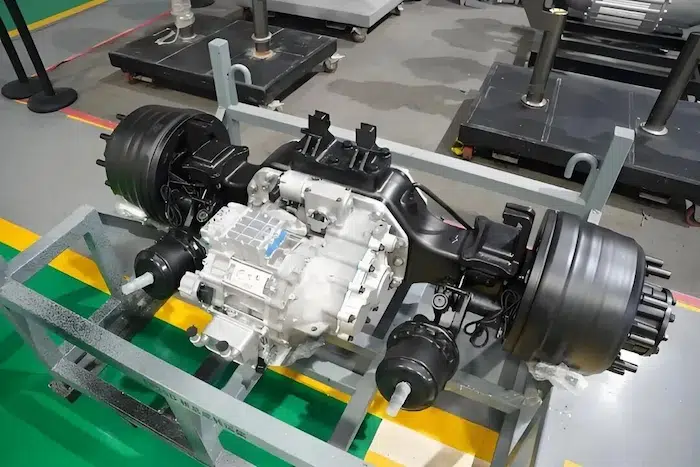
No Rare Earths, No Advanced Tech: How They Power DCDC, DCAC, and OBC Systems in Power Conversion
In today's world of accelerating electric vehicles and booming renewable energy, efficient power conversion and control technologies are the unsung heroes behind the scenes. Among them, DCDC converters, DCAC inverters, and On-Board Chargers (OBC) form the core triangle of modern power electronic systems, acting like "smart traffic hubs" for electrical energy, precisely directing the flow and form of every joule. However, what many don't realize is that each leap in performance for these critical components relies on the support of a special group of metallic elements—rare earths. This is no coincidence; it is determined by the unique atomic structure and inherent physical properties of rare earth elements, making them the key to breaking through the performance limits of traditional materials.
This article delves into how rare earth materials are deeply embedded in the power conversion chain, becoming critical factors in enhancing the efficiency, power density, and reliability of DCDC, DCAC, and OBC systems, and analyzes the technical roots of their indispensability.
Rare Earths: The "Vitamins" and "Performance Amplifiers" of Power Electronics
Rare earths do not refer to a specific type of soil but are a general term for 17 metallic elements with similar chemical properties, such as Neodymium (Nd), Dysprosium (Dy), Samarium (Sm), and Gadolinium (Gd). Their unique 4f electron shell structure grants materials exceptional magnetic, optical, and catalytic properties. In the field of power conversion, this characteristic is translated into two core applications: first, manufacturing ultra-high-strength permanent magnets (e.g., NdFeB), and second, serving as critical dopants or constituent elements that dramatically enhance the properties of functional materials like soft magnetics, insulators, and thermal conductors. Although used in small proportions, they act like "chemical seasonings" and "performance amplifiers," determining the peak performance of the final product.
DCDC Converters: The Revolution in Core Materials Under the Dual Challenges of Efficiency and Density
DCDC converters are responsible for efficient conversion between different DC voltage levels. They are widely used in auxiliary power sources for electric vehicles, between high-voltage batteries and low-voltage systems, and are also central to data centers and communication power supplies.
-
Core Requirements: High frequency, high efficiency, miniaturization. Higher switching frequencies can reduce the size of passive components but also lead to a sharp increase in core losses.
-
The Profound Role of Rare Earths: High-performance DCDC converters rely on high-frequency transformers and inductors. The performance of their core material directly determines the ceiling. Traditional ferrite materials suffer from drastically increased losses at high frequencies. In contrast, amorphous or nanocrystalline soft magnetic alloys improved with rare earth elements like Gadolinium (Gd) or Dysprosium (Dy) feature an extremely uniform microstructure, resulting in exceptionally high magnetic permeability and remarkably low core losses (iron losses). This stems from the effective pinning and optimization of alloy magnetic domain wall motion by rare earth atoms. This allows converters to operate stably at frequencies of several hundred kHz or even MHz, thereby reducing the volume and weight of magnetic components by up to 50%, while pushing peak overall conversion efficiency above 97%. In the industry race for "watts per cubic inch," rare earth soft magnetic materials are the cornerstone of victory.
DCAC Inverters: The "Art of Staying Cool" While Handling High Power
DCAC inverters, particularly the traction inverters in electric vehicles, are responsible for converting the battery's direct current into precisely controlled alternating current to drive the motor. They are the "heart" of an EV.
-
Core Requirements: High power density, high switching frequency, high-temperature resistance, high reliability. Higher switching frequencies reduce harmonics and improve motor control precision but pose extreme challenges for heat dissipation.
-
Multi-Dimensional Empowerment by Rare Earths:
-
Thermal Management Foundation: While the most advanced silicon carbide (SiC) and gallium nitride (GaN) power chips are superior, the high heat flux density they generate must be dissipated rapidly. Rare earth oxides such as Lanthanum (La) and Yttrium (Y) are key sintering aids for producing high-performance aluminum nitride (AlN) thermally conductive ceramic substrates. They promote densification during sintering, bringing thermal conductivity close to theoretical values, thereby keeping the chip junction temperature within a safe range and ensuring the inverter's sustained peak power output.
-
Insulation Guardian: In high-voltage modules, ceramic materials doped with rare earth oxides are also commonly used to create copper-clad ceramic substrates that offer high insulation and high thermal conductivity, ensuring the unity of electrical safety and thermal management.
-
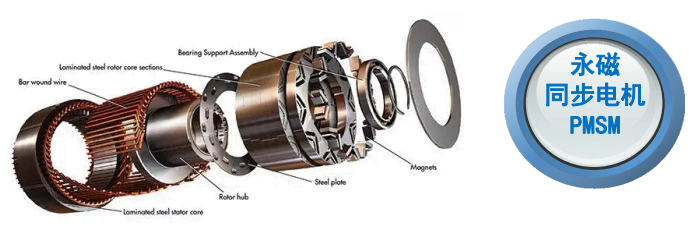
Sensing Precision: Although the inverter itself does not directly contain permanent magnets, its control algorithms depend on precise feedback of the motor rotor's position. The core of the rotor in high-performance Permanent Magnet Synchronous Motors (PMSM) is precisely the rare earth NdFeB magnet. The inverter and the rare earth permanent magnet motor form an inseparable, highly efficient power coupling system.
-
On-Board Charger (OBC): The Bridge to Fast Charging and Vehicle-to-Grid Interaction
The OBC is the core of AC charging for electric vehicles, converting grid AC to DC to charge the battery. It is evolving towards high-power, bidirectional intelligent charging.
-
Core Requirements: High efficiency, bidirectional functionality (V2L/V2G), lightweight, high power factor. Bidirectional OBCs require seamless reverse power flow, placing near-stringent demands on the linearity and low-loss characteristics of magnetic components in the circuit.
-
Critical Support from Rare Earths: Similar to DCDC converters, the core materials of the high-frequency isolation transformer and PFC (Power Factor Correction) inductor in an OBC are performance bottlenecks. During high-power charging (e.g., 22kW), core loss and temperature rise directly constrain efficiency and reliability. Using amorphous/nanocrystalline cores optimized with rare earths, thanks to their near-zero magnetostriction coefficient and low-loss characteristics, can perfectly handle the challenges posed by high-frequency bidirectional magnetization. This enables charging efficiency of up to 96% and significantly reduces size. Furthermore, for intelligent grid integration, OBCs require more precise current sensing, which may also utilize precision current sensors based on the giant magnetoresistance effect of rare earths. Without advancements in rare earth materials, the vision of household vehicles as efficient mobile energy storage units would be difficult to realize.
Challenges, Innovation, and Future Outlook: Finding Balance Between Dependence and Breakthroughs
Although rare earth elements are indispensable, their concentrated supply chain, price volatility, and the environmental impact of mining and processing constitute a risk of "critical technology dependence." This reality is forcing global R&D efforts to accelerate along two main fronts:
-
Reduction, Substitution, and Technological Breakthroughs: Material scientists are working to develop high-coercivity NdFeB magnets with reduced heavy rare earth content (e.g., Dysprosium) through technologies like grain boundary diffusion. Simultaneously, they are exploring rare-earth-free permanent magnet motors (e.g., wound-field synchronous motors) and new composition iron-nitride (FeN) based soft magnetic materials to achieve fundamental breakthroughs.
-
Circular Economy and System Optimization: Technologies for efficiently recycling rare earth elements from end-of-life electronics and motors are maturing. On another front, by employing more advanced circuit topologies (e.g., multilevel, resonant soft-switching) and digital intelligent control algorithms, the industry aims to reduce reliance on the performance limits of single materials and unlock efficiency potential from a system level.
Conclusion
From quietly enhancing the efficiency and density of DCDC converters, to enabling DCAC inverters to operate coolly under high temperatures and voltages while delivering strong power, to ensuring OBCs become efficient, intelligent bidirectional energy gateways, rare earth elements are deeply embedded in the physical foundation of modern power conversion technology. They are not merely "raw materials" but are core enablers for achieving efficient, precise, and reliable electrical energy conversion.
Facing the grand narrative of global electrification and the zero-carbon transition, DCDC, DCAC, and OBC technologies, as the "last mile" of energy conversion, will see their evolutionary path inextricably linked to innovation and sustainable management of rare earth materials. Understanding the profound role of rare earths is not only key to discerning the current technological landscape but also a crucial perspective for grasping the future pulse of the power electronics industry. Under the dual requirements of performance and sustainability, this co-evolution of materials, design, and systems has just entered its most exciting chapter.