


News










How an Electric Car Motor Works: Everything You Need to Know
1. Introduction
As the global push for sustainability accelerates, electric vehicles (EVs) have moved from a niche alternative to a mainstream choice for drivers worldwide. At the heart of every EV’s smooth, quiet, and powerful performance lies the electric car motor—often called the “ev drive motor” in industry terms. Unlike the internal combustion engines that have dominated roads for over a century, EV motors rely on electromagnetic forces to generate motion, offering superior efficiency, lower maintenance, and zero tailpipe emissions.
Whether you’re a current EV owner curious about how your car works, a prospective buyer researching key components, or someone looking to understand the technology behind eco-friendly transportation, this guide breaks down everything you need to know about electric car motors.
2. Core Basics: How Electric Car Motors Differ from Gas Engines
To truly grasp how electric car motors work, it’s first helpful to contrast them with the gasoline engines most of us are familiar with. The fundamental difference boils down to how each generates power—and the inefficiencies that come with gas engines.
Gasoline engines operate on a four-stroke cycle (intake, compression, combustion, exhaust). They require fuel to be mixed with air, ignited by a spark plug, and the resulting explosion pushes a piston, which turns a crankshaft to drive the wheels. This process is inherently inefficient: only about 20-30% of the energy from gasoline is converted into usable motion, with the rest lost as heat and exhaust.
Electric car motors, by contrast, convert electrical energy into mechanical energy directly using electromagnetic principles. There’s no combustion, no pistons, no crankshaft, and far fewer moving parts. This simplicity translates to significantly higher efficiency—typically 75-90% of electrical energy becomes usable motion. Other key differences include:
Instant Torque: EV motors deliver maximum torque from a standstill, providing quick acceleration without the need for gear shifting.
Quiet Operation: No combustion or mechanical noise means EV motors run almost silently.
Lower Maintenance: Fewer moving parts mean less wear and tear—no oil changes, spark plug replacements, or exhaust system repairs.
Zero Emissions: No tailpipe exhaust, making EVs a cornerstone of zero-emission transportation.
3. Basic Principles of Electric Vehicle Motors
All electric car motors operate on the same core principle: electromagnetic induction, first discovered by Michael Faraday in 1831. Faraday’s law states that a voltage is induced in a conductor when it moves through a magnetic field—or when a magnetic field moves around the conductor. This induced voltage creates an electric current, which in turn generates a magnetic force that produces motion.
Simplified, here’s how this plays out in an EV motor:
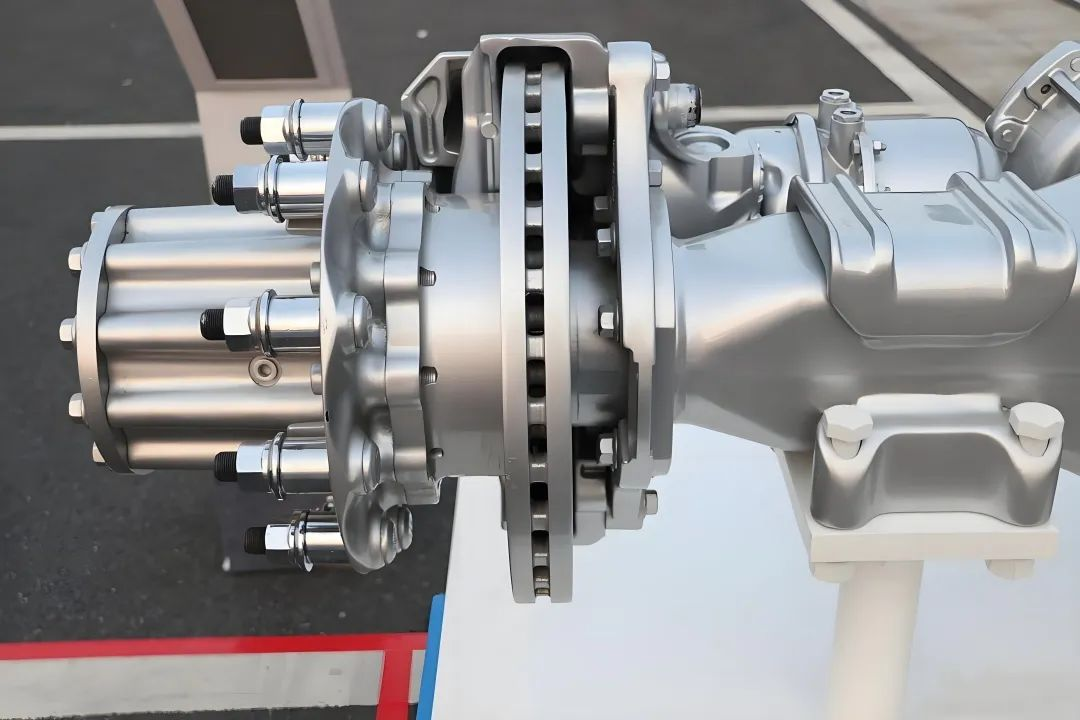
The motor has two main parts: a stationary component and a rotating component (rotor).
The stator contains coils of wire that are supplied with electrical current from the EV’s battery.
When current flows through the stator windings, it creates a rotating magnetic field.
The rotor, which is either a permanent magnet or an electromagnet, is attracted to the rotating magnetic field of the stator.
As the stator’s magnetic field rotates, it pulls the rotor along with it, creating rotational motion that drives the EV’s wheels.
A key point here is that EV motors are “reversible”: when the car decelerates or brakes, the motor acts as a generator, converting the vehicle’s kinetic energy back into electrical energy to recharge the battery (this is regenerative braking—a feature that boosts EV efficiency and range).
4. Key Components of Electric Vehicle Drive Motors
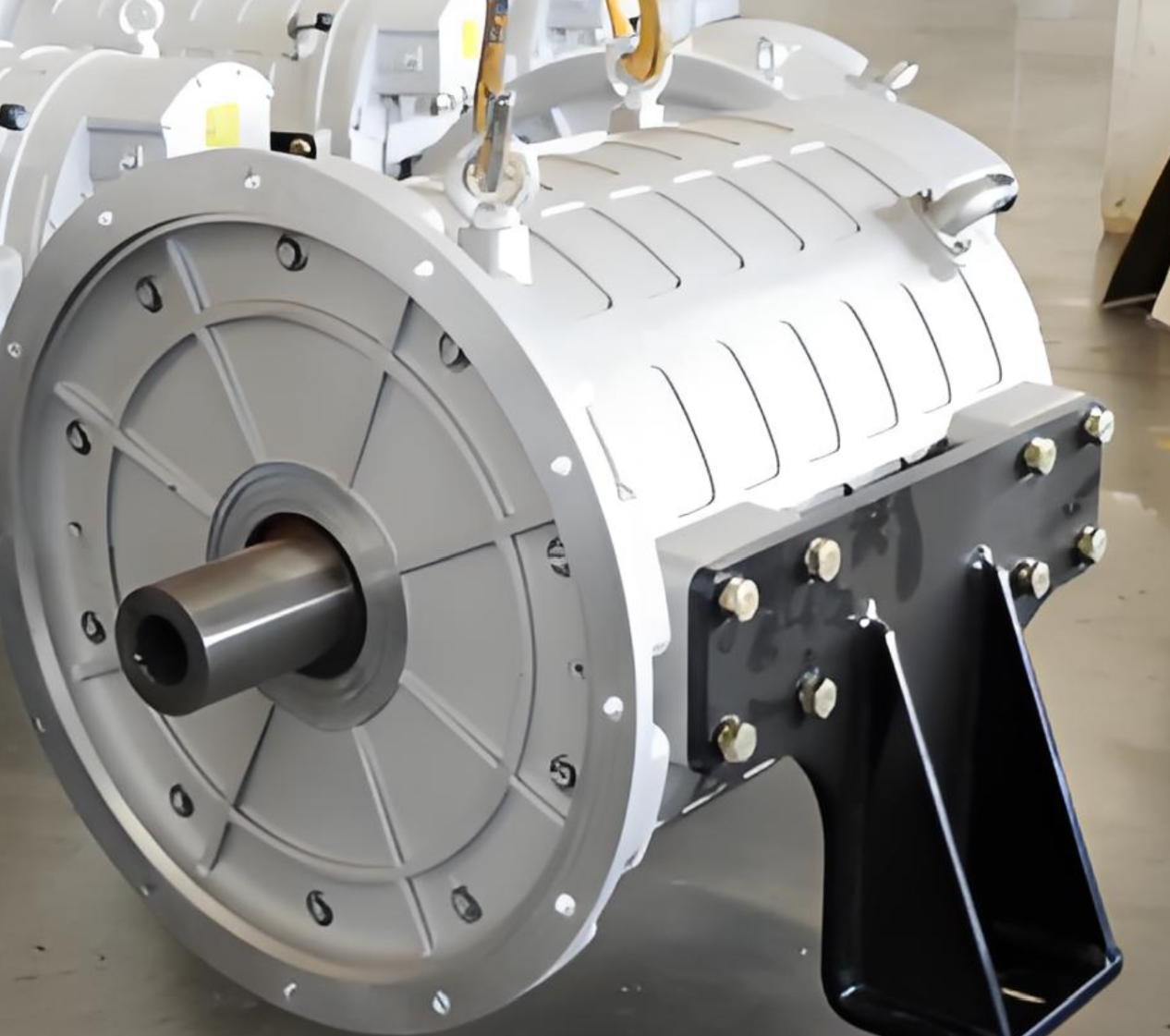
While the basic principle of electromagnetic induction is simple, an ev drive motor is a sophisticated assembly of components working in harmony to deliver reliable, efficient power. Below are the critical parts you need to know:
4.1 Stator
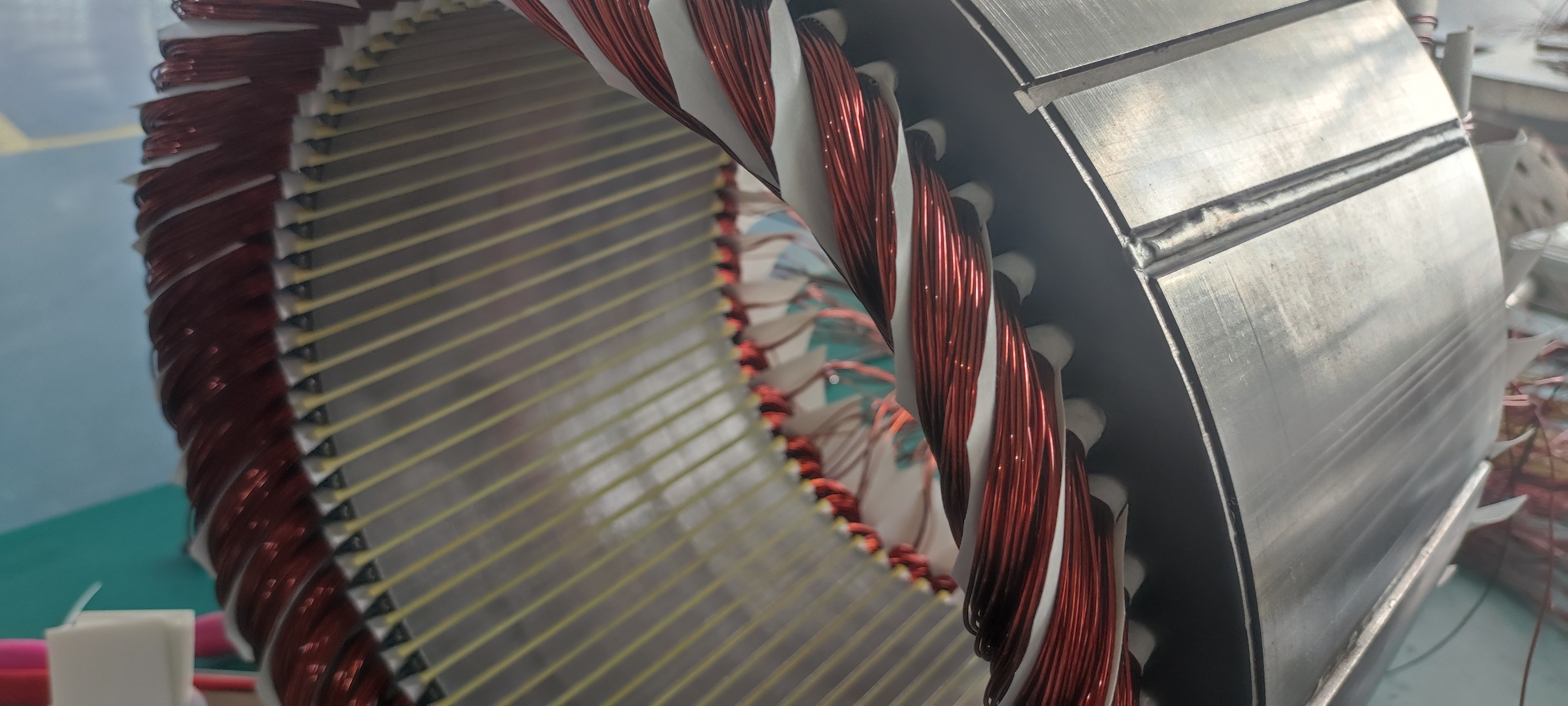
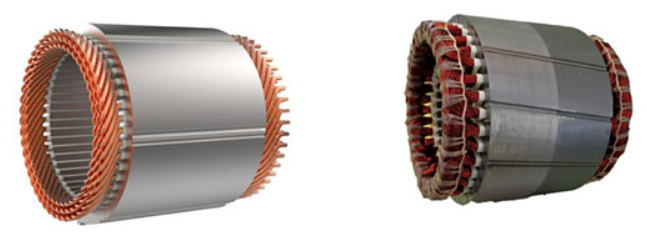
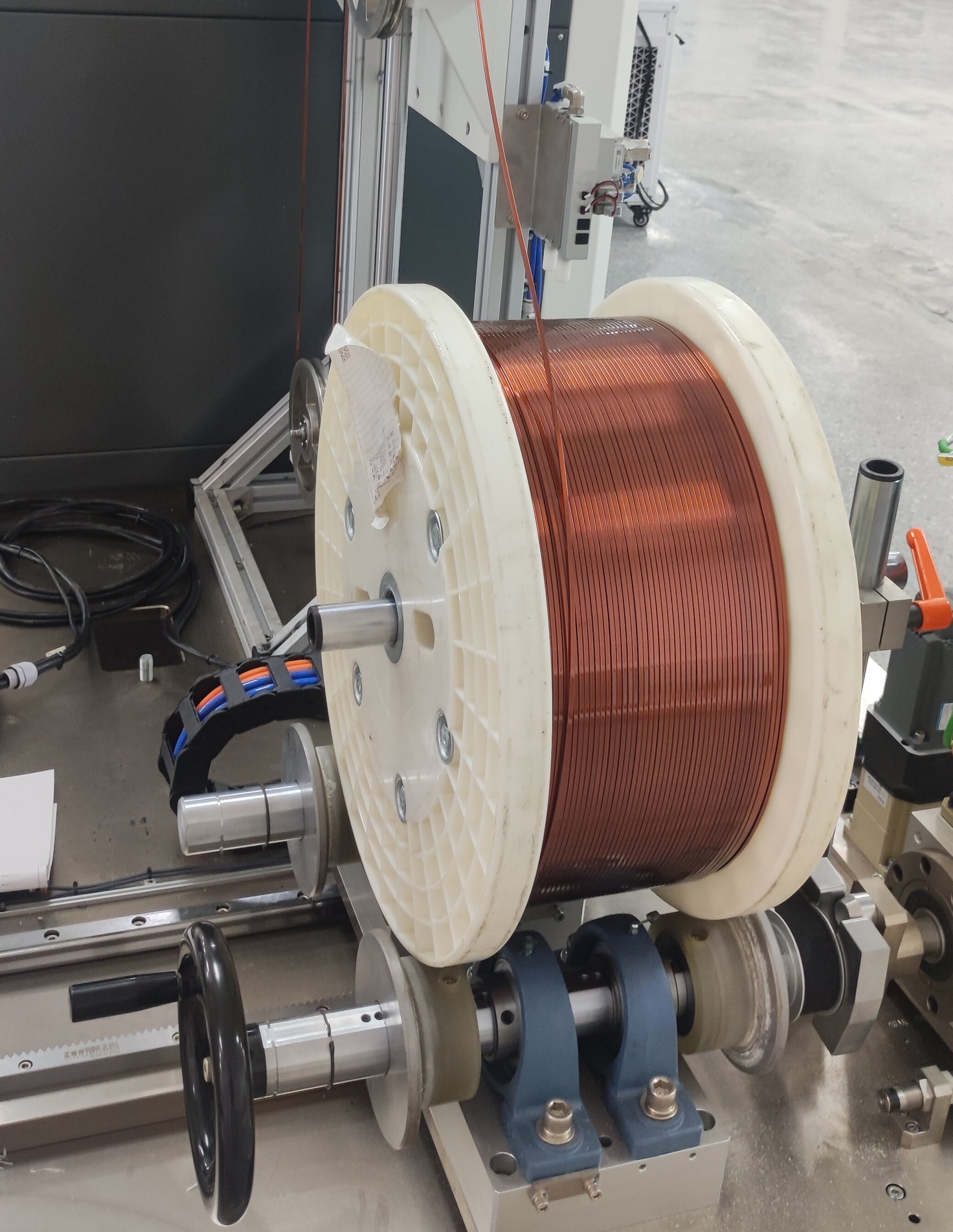
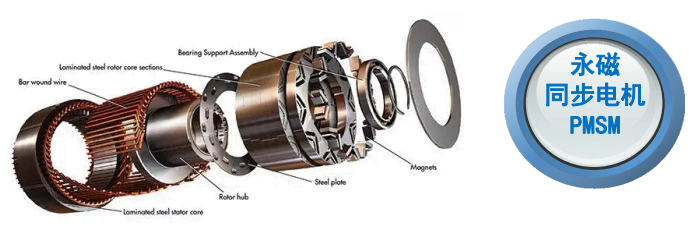
The stator is the stationary outer part of the motor, typically made of a iron core with copper (or aluminum) wire windings wrapped around it. Its job is to generate the rotating magnetic field that drives the rotor. The number of windings and their arrangement determine the motor’s speed and torque characteristics. High-quality stators use copper windings for better conductivity and heat resistance—critical for long-term performance.
4.2 Rotor
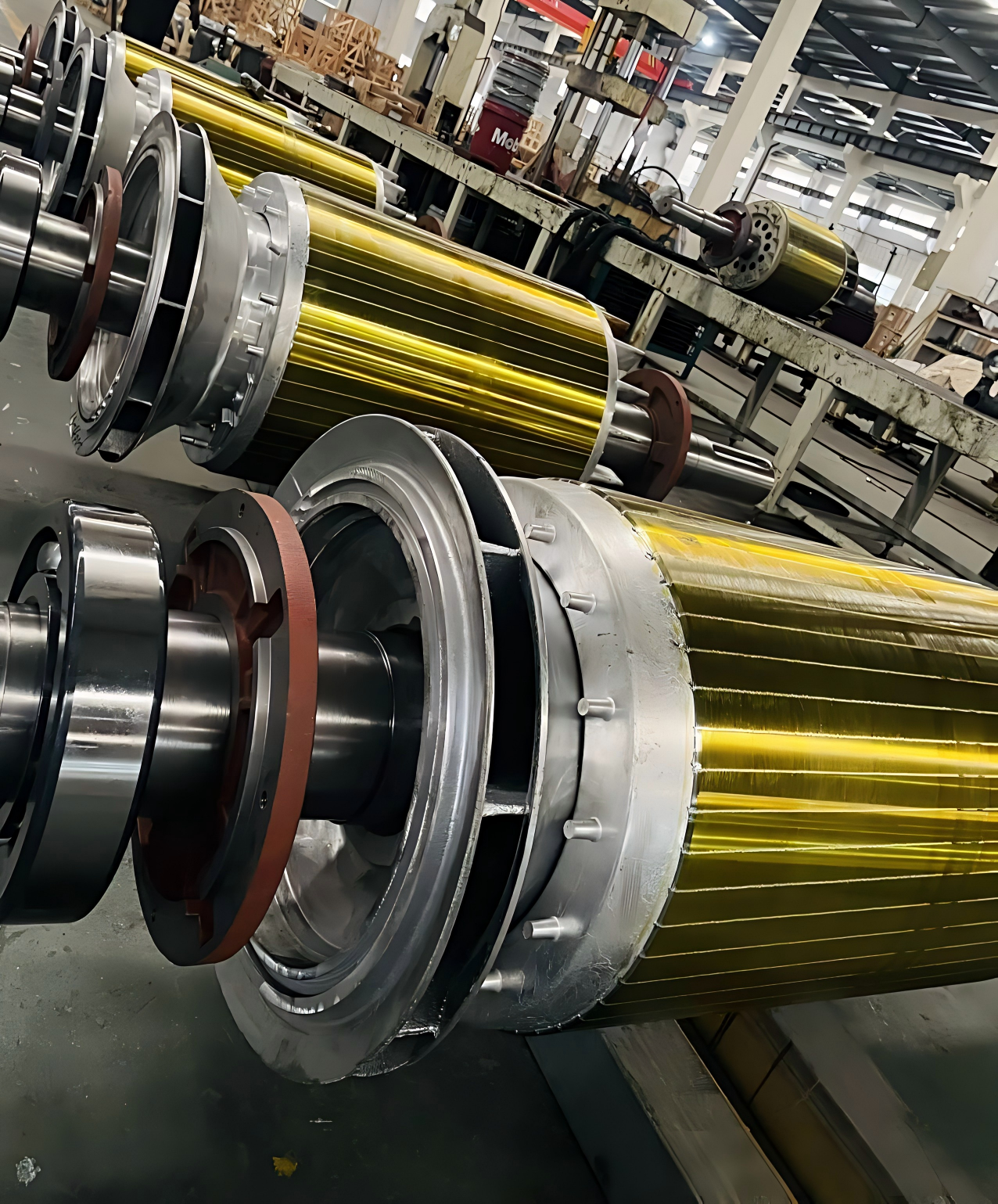
The rotor is the rotating inner component that connects to the motor’s output shaft. There are two main types of rotors: permanent magnet rotors and induction rotors. Permanent magnet rotors are more efficient because they don’t require external current to generate a magnetic field, while induction rotors are simpler and more durable.
4.3 Inverter
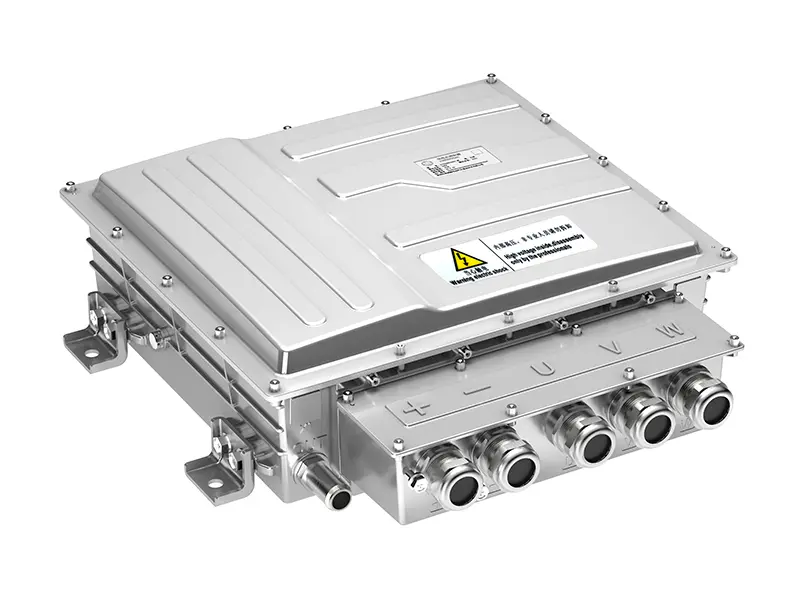
EV batteries store direct current electricity, but most electric motors require alternating current (AC) to generate a rotating magnetic field. The inverter’s role is to convert DC power from the battery to AC power for the stator windings. It also controls the frequency and voltage of the AC current, which regulates the motor’s speed and torque. Modern inverters use silicon carbide or gallium nitride semiconductors for higher efficiency and faster switching speeds—key for improving EV range.
4.4 Reducer/Gearbox
Electric motors spin at much higher speeds than gas engines. A reducer lowers the motor’s output speed while increasing torque—making it suitable for driving the wheels. Most EVs use a single-speed reducer because the motor’s torque curve is flat, eliminating the need for multiple gears. Some high-performance EVs use two-speed gearboxes for better high-speed efficiency.
4.5 Cooling System
Like any mechanical/electrical component, EV motors generate heat during operation—especially under heavy load. Excess heat can damage windings, magnets, and other parts, so a cooling system is essential. Most EV motors use liquid cooling (similar to gas engines), with coolant circulating around the stator and inverter to dissipate heat. Some newer designs use direct oil cooling for even better heat transfer.
4.6 Sensors and Controllers
Sensors monitor the motor’s operation in real time. Position sensors track the rotor’s position to ensure the inverter delivers AC current at the correct frequency. Temperature sensors prevent overheating, while current sensors protect against electrical faults. The motor controller uses data from these sensors to adjust the inverter’s output, ensuring smooth, efficient, and safe operation.
5. Types of Electric Vehicle Motors
Not all EV motors are the same—manufacturers choose different types based on cost, efficiency, performance, and application. The three most common types are permanent magnet synchronous motors, induction motors, and brushless DC motors.
5.1 Permanent Magnet Synchronous Motor (PMSM)
PMSMs are the most widely used motors in modern EVs (e.g., Tesla Model 3, Nissan Leaf, Toyota Prius Prime). As the name suggests, they use permanent magnets in the rotor, and the rotor’s speed is “synchronous” with the stator’s rotating magnetic field.
Advantages: High efficiency, high power density, and excellent torque delivery. Disadvantages: Higher cost due to rare-earth magnets and potential demagnetization at high temperatures.
5.2 Induction Motor (IM)
Induction motors were popularized in early EVs like the Tesla Roadster. They don’t use permanent magnets—instead, the rotor is made of conductive bars, and the stator’s magnetic field induces an electric current in the rotor (via electromagnetic induction), which creates its own magnetic field.
Advantages: Lower cost, high durability, and better performance at high speeds and high temperatures. Disadvantages: Lower efficiency at low speeds and lower power density.
Today, some manufacturers use a combination of PMSMs and induction motors to balance efficiency and performance: PMSM for daily driving and induction motor for high-performance scenarios.
5.3 Brushless DC Motor (BLDC)
BLDC motors are a type of synchronous motor that uses permanent magnets in the rotor and electronic commutation to control the stator’s magnetic field. They’re similar to PMSMs but use trapezoidal current.
Advantages: High efficiency, low noise, long lifespan, and simple control. Disadvantages: Lower torque ripple than brushed DC motors but higher than PMSMs. BLDC motors are more common in small EVs but are also used in some low-cost passenger EVs.
6. Performance Factors of Electric Vehicle Motors
When evaluating an EV’s performance, the motor’s specifications are just as important as the battery’s capacity. Below are the key factors determining an electric car motor’s performance:
6.1 Power (kW)
Power (measured in kW) dictates the EV’s top speed and acceleration—higher power means faster acceleration and top speed. For instance, a 100 kW compact EV feels less powerful than a 300 kW performance model.
6.2 Torque (Nm)
Torque (Nm) is the rotational force driving the wheels, enabling EVs’ instant off-the-line acceleration. Unlike gas engines, EV motors deliver max torque from 0 RPM, making even low-power EVs responsive in cities.
6.3 Efficiency (%)
Efficiency (%) reflects how much battery electricity converts to usable motion—higher efficiency boosts range (modern EV motors: 85-95% efficient under normal use). Key influences: motor type, speed, load, and cooling.
6.4 Power Density (kW/kg)
Power density (kW/kg) is power per unit weight; higher density means a smaller, lighter motor (critical for range/handling). PMSMs outperform induction motors here due to lighter permanent magnets.
6.5 Speed (RPM)
EV motors spin faster (10,000-20,000 RPM) than gas engines, enabling high-speed power. Manufacturers balance speed and efficiency via gearbox design, as efficiency drops at very high RPM.
6.6 Thermal Management
Thermal management is vital for consistent performance. Overheating reduces power or damages components; advanced cooling systems maintain performance under heavy loads.
7. Common Faults and Troubleshooting Techniques
Electric car motors are generally reliable, but like any component, they can develop faults over time. Below are common issues and basic troubleshooting techniques:
7.1 Motor Noise
Causes: Worn bearings, loose components, or gearbox issues (if applicable). Troubleshooting: Check for loose bolts or connections. If the noise is a high-pitched whine, it may be a bearing issue. If it’s a grinding noise, stop driving immediately—this could indicate a damaged rotor or gearbox.
7.2 Reduced Power/Acceleration
Causes: Overheating, inverter issues, or battery problems. Troubleshooting: Check the EV’s temperature gauge. If overheating, stop driving and let the motor cool down. If the battery is charged, the issue may be with the inverter or sensors—have a technician run a diagnostic scan.
7.3 Motor Not Starting
Causes: Dead battery, faulty inverter, or sensor failure (e.g., position sensor). Troubleshooting: Check the battery charge. If the battery is charged, the issue is likely electrical—have a technician test the inverter and sensors.
8. Electric Vehicle Motor Buying Guide
If you’re in the market for an electric car motor for sale (e.g., for a custom EV build, replacement, or upgrade), here are the key factors to consider:
8.1 Compatibility
First, ensure the motor is compatible with your EV’s battery voltage and chassis. Most EVs use 400V systems, but newer high-performance models use 800V systems. Also, check the motor’s mounting dimensions and output shaft size to ensure it fits your vehicle’s drivetrain.
8.2 Power and Torque Requirements
Determine your power needs based on how you’ll use the EV. For a daily commuter EV, a 80-150 kW motor is sufficient. For a performance build, look for 200+ kW. Torque should be matched to your vehicle’s weight—heavier vehicles (e.g., SUVs) need more torque (300+ Nm) for adequate acceleration.
8.3 Motor Type
Choose the motor type based on your priorities: PMSM for efficiency and range (best for daily driving), induction motor for durability and high-performance (best for custom builds or heavy use), or BLDC for low cost and simplicity.
8.4 Brand and Reliability
Stick to reputable brands for replacement motors—these have a proven track record of reliability. For custom builds, look for motors from trusted EV component suppliers, for example, Pumbaaev. Avoid cheap, unbranded motors—they may have poor quality control and lack safety features.
8.5 Warranty
A good warranty is critical for peace of mind. Most OEM (original equipment manufacturer) replacement motors come with a 1-3 year warranty. Aftermarket motors may have shorter warranties, so read the fine print carefully.
9. Conclusion
The electric car motor is the unsung hero of the EV revolution, delivering efficient, powerful, and quiet performance that’s redefining transportation. From the basic principles of electromagnetic induction to the complex interplay of components like the stator, inverter, and cooling system, understanding how EV motors work helps you appreciate why they’re superior to gas engines in so many ways.
Whether you’re a current EV owner, a prospective buyer, or a hobbyist building a custom EV, this guide has covered everything you need to know: core differences from gas engines, key components, motor types, performance factors, troubleshooting, and how to choose an electric car motor for sale. As EV technology continues to evolve (with advancements like 800V systems, silicon carbide inverters, and rare-earth-free magnets), the electric car motor will only become more efficient, powerful, and affordable.
At the end of the day, the electric car motor is more than just a component—it’s the engine of a sustainable future. By understanding how it works, you’re better equipped to make informed decisions about EV ownership and contribute to a greener planet.